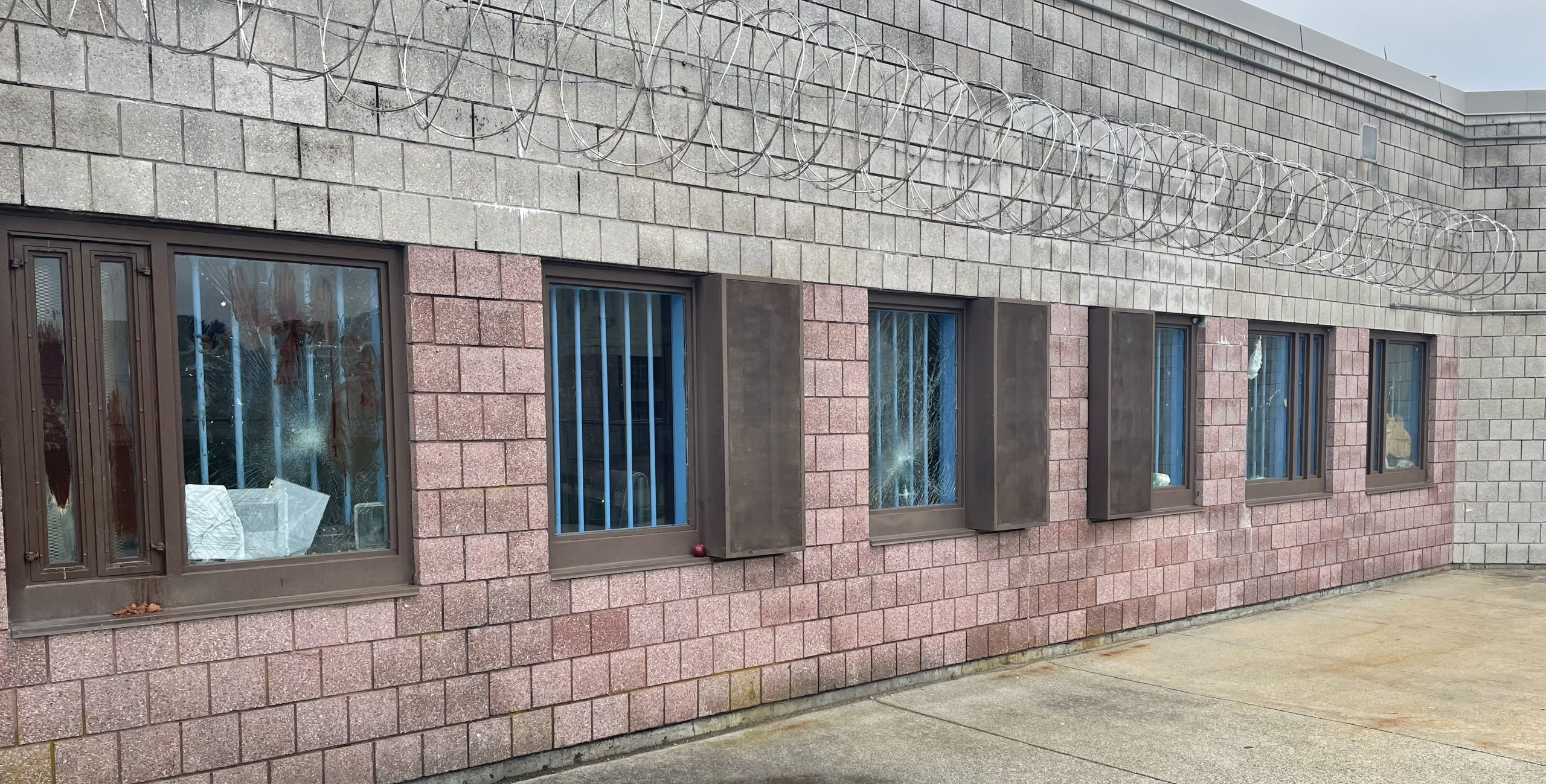
DARTMOUTH — Bristol County Sheriff Paul Heroux said a new report from the Massachusetts Office of the Inspector General supports his calls for state funding to install locks on all inmate cell doors at the Bristol County jail in Dartmouth.
In a statement issued Tuesday, June 2, Heroux said the OIG report states “what I have been saying for over three years – we need to put locks on inmate cell doors to make the Dartmouth jail safer, and if we do that, I can close the Ash Street jail in New Bedford and save the state money.”
The OIG’s report, titled, Final Report on Sheriffs’ Budgets and Expenditures and released June 1, found that “the Bristol County House of Correction lacks the proper funding for significant infrastructure upgrades and that such upgrades could ultimately save millions in operational costs.”
The Bristol County Sheriff’s Office operates the Bristol County Jail and House of Correction in Dartmouth, a women’s facility on the Dartmouth campus, and the Ash Street Jail and Regional Lock-Up in New Bedford.
According to Heroux, 11 of the Dartmouth jail’s 22 housing units, or 50%, do not have locks on cell doors.
The OIG’s report states that Massachusetts Department of Health regulations require that any jail cell in which an inmate is locked for any part of the day must have a working toilet and running water, which is currently not the case at the Dartmouth facility.
Heroux said installing locks at the Dartmouth facility would allow Bristol County to close the Ash Street Jail in New Bedford, which he described as “the nation’s oldest continuously operating money pit of a jail.” Heroux said inmates at Ash Street are kept in locked cells because “they need to be.” The OIG report also said the Ash Street Jail has reached the end of its useful life and should be decommissioned.
According to Heroux, the Bristol County Sheriff’s Office’s chief financial officer estimates that the investment in locks would pay for itself in two to three years through savings from closing the Ash Street Jail.
The report said Bristol County is attempting to secure funding through the Commonwealth’s Division of Capital Asset Management and Maintenance to install toilets, running water and locks on all cell doors. The report said estimates range from $10 million for a reduced-scope renovation to $20 million for a full-scope renovation.
The OIG’s report also found that, “Not only does housing individuals in unlocked cells create serious safety concerns for the inmates, potentially in violation of state statutes and regulations, but it also creates safety concerns for the officers and staff working in the block, potentially in violation of state and federal occupational safety laws.”
Heroux said the safety issue is nothing new, citing a destructive inmate disturbance that took place at the Dartmouth jail on Easter in 2001, when inmates were able to move freely because cell doors did not have locks.
“This safety issue isn’t new,” Heroux said. “On Easter in 2001, without locks on cell doors, inmates were able to run free in the jail. They caused $1 million in damage, and got on the jail roof and threw rocks at officers injuring many. A 25-year old CO was sent into retirement after inmates split his head open and threw him out a window. A hostage situation ensued. People ended up the hospital. The jail was sued by inmates for the conditions they claim that led to the Easter riot.”
Heroux also referenced an inmate standoff at the Dartmouth facility in April 2023 that began after the inmates of units GA and GB were told they were going to be relocated to more suicide resistant units with locks on the doors, saying he believed the incident would lead the state to fund the needed safety upgrades.
“In the aftermath of the destructive inmate disturbance in April 2023, I thought for sure the state would have given us what has been needed to make this jail safer,” Heroux said. Adding, “I have had many state reps and state senators visit the jail to see for themselves what is needed to make this jail safer- locks on inmate cell doors.”
Since no one was injured in the 2023 incident, Heroux asked if the state needs to wait for an injury before funding the safety upgrades.
“In 2023, no one was hurt and we weren’t sued, but do we need to wait for someone to get hurt again before the state acts on improving the safety of this jail?” Heroux said.
Heroux said he does not place blame on any one branch of state government for the inaction, but said that state spending decisions do reflect priorities.
“With the release of the OIG report, will the state finally help make this jail safe?” Heroux said. “Budgets reflect priorities.”