LEOMINSTER — The Leominster Conservation Commission on Aug. 12 issued a negative determination for two city wastewater pump station replacement projects and held an initial hearing on a large residential development at Orchard Hill Park Drive.
The first application, a request for determination of applicability filed by the Department of Public Works, proposed replacing pump stations on Hamilton Street and Prospect Street. Civil engineer Larry Rusiecki with Wright-Pierce said the scope of the project on Prospect Street is to “remove and replace generally in kind” with “larger capacity” pumps, maintaining the “same paved areas, gravel areas, [and] adjacent green space.”

On Hamilton Street, Rusiecki said the project would add a generator to provide “continuous electric service” to the sewer pump station. He noted that “two parking spaces [will be] displaced” due to a fence line around the generator pad.
The commission voted unanimously for a negative determination, meaning the work “will not remove, fill, dredge, or alter” protected resource areas and does not require a Notice of Intent.


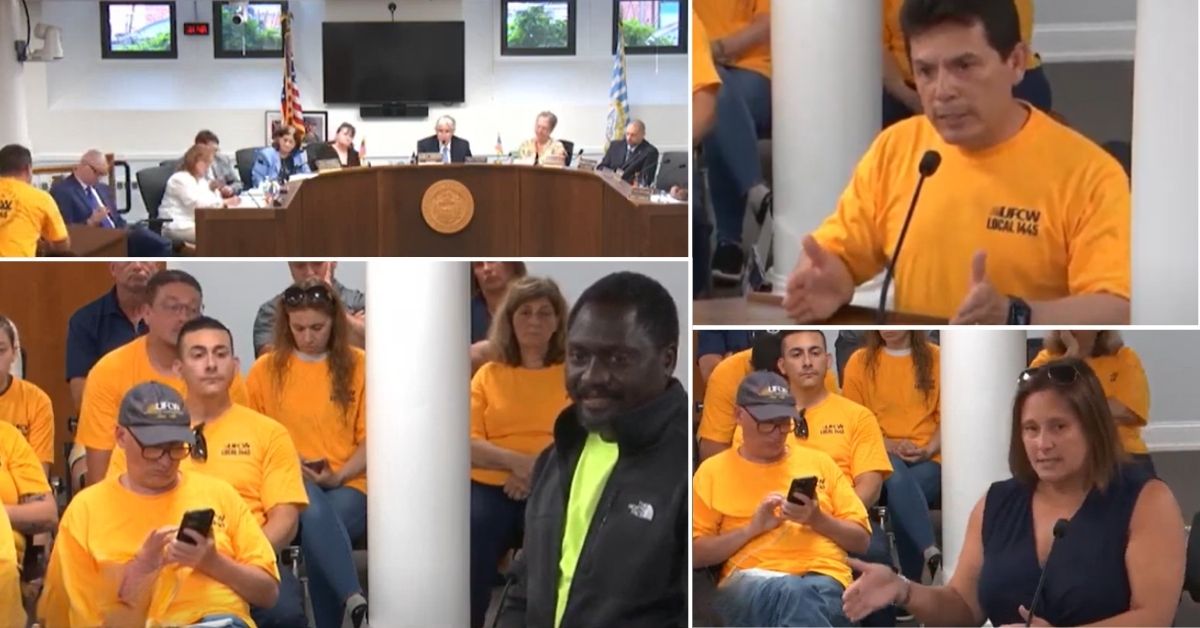
Photo Credit: Leominster Access Television’s YouTube Channel
The second hearing involved a Notice of Intent filed by James Lambert for a proposed residential development at Lot E, Orchard Hill Park Drive—a nine-building project involving two wetland crossings.
Before the presentation began, Conservation Commission Chair Chuck Raymond addressed the audience to clarify the commission’s role. “There is nothing in the Wetlands Protection Act that disallows this project, that disallows building so close to the wetlands,” Raymond said. “It’s our understanding that this project as proposed is permittable under the state’s wetlands regulations.” Raymond explained the commission’s responsibility was “to condition it as best we can to protect the wetland functionality, water quality, wildlife habitat, and other wetland benefits,” despite commissioners having “questions, problems, [and] concerns” with the proposal.
Environmental consultant and wetland scientist, Matt Marro, representing the applicant, WP East Acquisitions L.L.C., said the team has delineated all wetland resource areas and that the project design complies with the Massachusetts Wetlands Protection Act regulations, which govern activities in and around wetlands to preserve water quality, habitat, and flood control.
“The proposed work is adjacent to the wetland that does contain potential vernal pools as noted in MassGIS [Massachusetts Bureau of Geographic Information]. There is no, I repeat, no alteration proposed of any of those depressions,” Marro said, referring to potential vernal pools identified on site. “The work is designed to avoid any fragmentation of barriers to migration to the wildlife. And I will review this with the commission on how that is accomplished.”
The project includes two wetland crossings that would result in 3,260 square feet of permanent bordering vegetated wetland alteration. Marro said a 1:1 replication area is proposed, and that the team conducted a full drainage analysis.
Commissioners expressed concern about the proposed development’s proximity to protected wetlands. Raymond criticized what he described as a “brazen intrusion into the 100 foot buffer” zone and suggested increasing the replication ratio to help compensate for the extent of the encroachment. “I personally would prefer to see at least a 1.5 to 1 replication, if not two,” Raymond said.
Commissioner Nicholas Venti questioned the effectiveness of the stormwater management plan in light of concerns raised by the third-party reviewer. Referring to Fuss & O’Neill’s comments, he said, “They wanted some more—they had some questions about bio retention basins one and two regarding potential high ground water during the spring.” Venti asked the applicant to elaborate on how impermeable surfaces would prevent groundwater from seeping into those structures, noting, “I believe the response was that…you had some impermeable surface that was going to prevent groundwater from seeping up into those structures.”
During the public comment portion of the meeting, Bill Brady of Harvard Street raised concerns about a conflict of interest involving Marro. Brady alleged that Marro, who previously served as the city’s conservation agent from 1992 to 2006, was barred under state ethics laws from participating in the project because he had been involved with the same land parcel during his tenure with the city.
“My concern tonight is surrounding a conflict of interest with the notice of intent,” Brady said. “I’m asking the conservation commission to reject the filing on the basis that it was prepared and submitted in violation of Mass General Law because the agent, Matthew Marro, is legally prohibited from acting in this role on this land parcel…Mr. Morrow the conservation agent of record for the City of Leominster from 1992 to 2006. During that time, he was involved in the review and decision on the order of conditions DEP file number 199744, which was issued by his department on September 10th of 2003, recorded in book 51-17 on page 361. This order is specific to the same land parcel for which Mr. Morrow has drafted the notice of intent and submitted on behalf of the client. This notice of intent is actively prohibited by the Massachusetts conflict of interest law. It’s a lifetime ban.”
Ray Terrio of Stage Coach Road, an abutter to the proposed Orchard Hill residential project, told the commission during public comment that his property borders conservation land. He claimed construction has already begun on the site and that a pond on the conservation land has been drained.
“Now, since the construction has already started, most of us didn’t really know that much about it, but they’re blasting,” Terrio said. “I have a pond behind the house and it’s gone now. You know what I mean? I don’t know why it’s drained away, but the last two years it’s drained away. No more ducks. You know, it’s gone. So, I don’t know if it’s from the construction, but it’s affecting that area as well, I believe.”
Raymond asked Marro whether construction had already begun. Marro responded that it had not, explaining that Terrio was referring to “the industrial roadway.”
“There’s a lot of earth moving in that road with the cul-de-sac, but that has nothing to do with this project,” Marro replied. “It doesn’t have anything to do with this project, but I mean, fair question. I’ll check it out.”
The commission voted to continue the hearing to September 9, 2025, as a Department of Environmental Protection file number had not yet been issued and Marro said he planned to consult the state ethics commission in response to Brady’s conflict of interest claim.


2 thoughts on “Orchard Hill development draws ethics complaint, wetland concerns at Leominster Conservation Commission meeting”