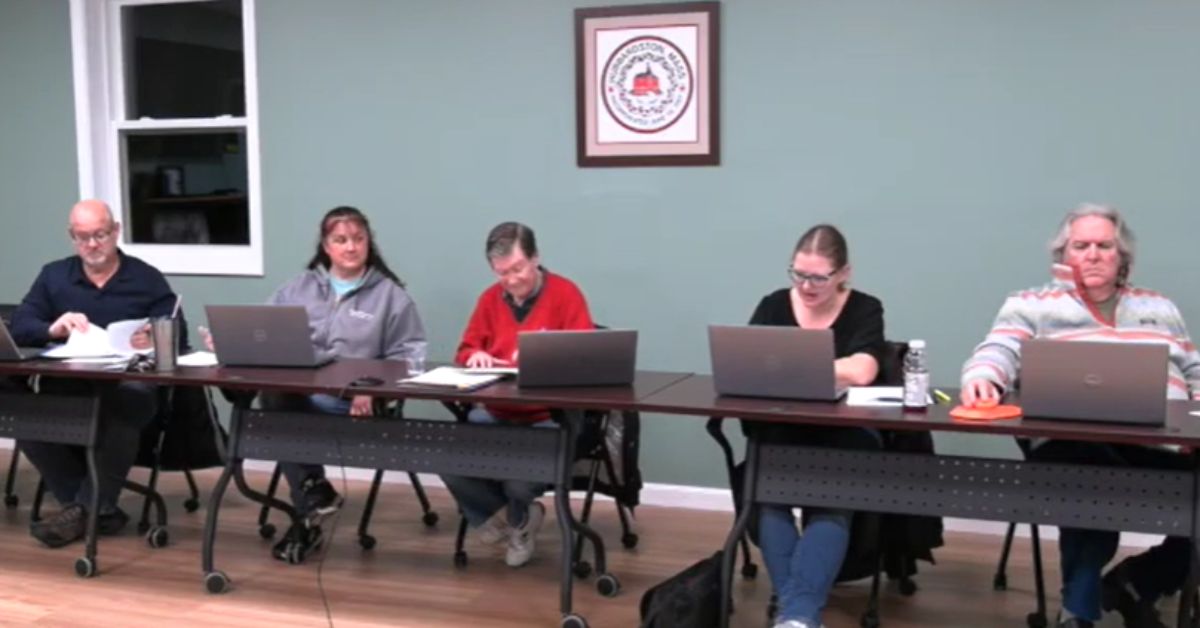
HUBBARDSTON — During its Dec. 29 meeting, the Hubbardston Select Board acknowledged and explained a years-long tax reporting error resulting from a voter-approved debt exclusion for a fire truck purchased in 2017.
“So anyone who wasn’t following with our debt exclusion, it was a vote that happened at both town meeting and the ballot to raise taxes for the period of time for a purchase,” Select Board member Heather Munroe said. “And the purchase at the time was the fire truck back in about 2017.”
Munroe explained that debt exclusions are designed to temporarily raise the tax rate to cover borrowing costs and then be removed once the debt is paid. “What was supposed to happen is once we did all the borrowing, everything was supposed to hit the tax rate,” Munroe said. Later adding, “And then once we’re done paying for it, the tax rate impact because of that item goes back down.”

Instead, the exclusion was never properly filed with the state. “For whatever reason back in 2017, a number of people ago in every office, it just never made it to a state form that’s reported, that’s part of our tax rate setting,” Munroe said. “And because it never made it there, it never rolled to the tax side.”
The error went undetected for about eight years, Munroe said, until a newly hired assessor reviewed the town’s debt exclusions. “We got lucky this year,” Munroe said. “We had a brand new assessor who actually pulled all of the exclusions from the state…and it was he who had noticed that that wasn’t accounted for anywhere.”
As a result, the town continued paying the debt internally without the voter-approved tax adjustment. “We were paying it every year, we’re just paying it within our levy limit,” Munroe said, explaining that meant funds that could have gone toward staffing, roads, or other services were instead used to cover the debt.
Munroe said the issue has now been corrected and will be reflected in future tax bills. “It will be resolved for next year,” Munroe said. “People will see a marginal increase in your tax rate as a result for a few more years until we have that paid off.”
The board acknowledged responsibility for the oversight. “It should have been [reported correctly] in the first place,” Munroe said. “But it was our error on the town side.”