FITCHBURG — The Fitchburg City Council met on May 20 to take up a full agenda that included passionate public testimony on a petition to remove fluoride from the city’s drinking water.
Dozens of residents spoke on Petition 1-11-25, which calls for an end to water fluoridation. Opponents warned of health risks and called on the council to act with caution. “Every drug has side effects and fluoride is no different,” said Fitchburg resident Jacqueline Wehtje. She urged the council to follow “the precautionary principle that says first do no harm.”
Jean Robie, another Fitchburg resident, described the fluoridation of water as “involuntary mass medication” and asked councilors, “If you legitimately care about our environment and the people of Fitchburg, you would no longer allow this in our water.”
Karen Spencer of Leominster, who stated she was invited by Fitchburg residents to speak on their behalf in support of Petition 1-11-25 because of her subject matter expertise, referenced studies that she said link fluoride exposure to reduced IQ in children.
“Many of the studies, many of the best studies, were done in Canadian communities like Toronto, where they found—when testing the women’s urine fluoride levels—that they had more fluoride than would be expected because they were drinking more fluoridated water,” Spencer said. “And that there was a correspondence with their children’s IQ — lower IQ associated with that.”
She also cited decisions by states such as Utah and Florida to end water fluoridation, stating, “They realized this needs to come out of the water.” Spencer added that fluoride is affecting children’s “thyroid” and “leading to obesity,” and that “it’s poisoning children’s guts and infecting the immunity right from childhood.”

Others defended the practice. Fitchburg resident Jessica Jacobson warned the council against making decisions based on fear. “Let’s not allow outdated assumptions and misinformation to dictate our public health safety,” Jacobson said. She also questioned the expertise of those speaking out against fluoride, noting that “dentists are not toxicologists” and should not be the sole voices on systemic effects. “Dentist play a vital role in oral health, but that doesn’t make them an expert in the systematic effects of fluoride when ingested or absorbed,” Jacobson said.
Following public comment, the council debated whether to act immediately on the petition. A motion to suspend the rules and bring the fluoride petition to a vote failed 7–3. The petition remains under review by the Legislative Affairs Committee.
A petition to halt the naming of city property after individuals was also referred to committee without discussion.
In other business, the council approved several municipal appointments. Ward 3 Councilor Andrew Couture reporting on behalf of the Appointments Committee, announced the confirmation of five full-time student police officers: Sarah Coffey, Tyler Doucette, Angelina Magaw-Chan, Arlene Tostes, and Adam Bourgault. All were confirmed by unanimous vote.
Council Couture also reported that Michael Hurley’s nomination to the Fitchburg Board of Registrars (for a term to expire April 1, 2028) had passed the committee on a 3–2 vote. The full council confirmed Hurley without objection. One nomination—Emily Stark to the Disability Commission—was held after she did not appear for her vetting hearing. James McGrath was unanimously reappointed to the Board of Parks Commissioners, and Krista Fords-Rhodes to the Human Rights Commission.
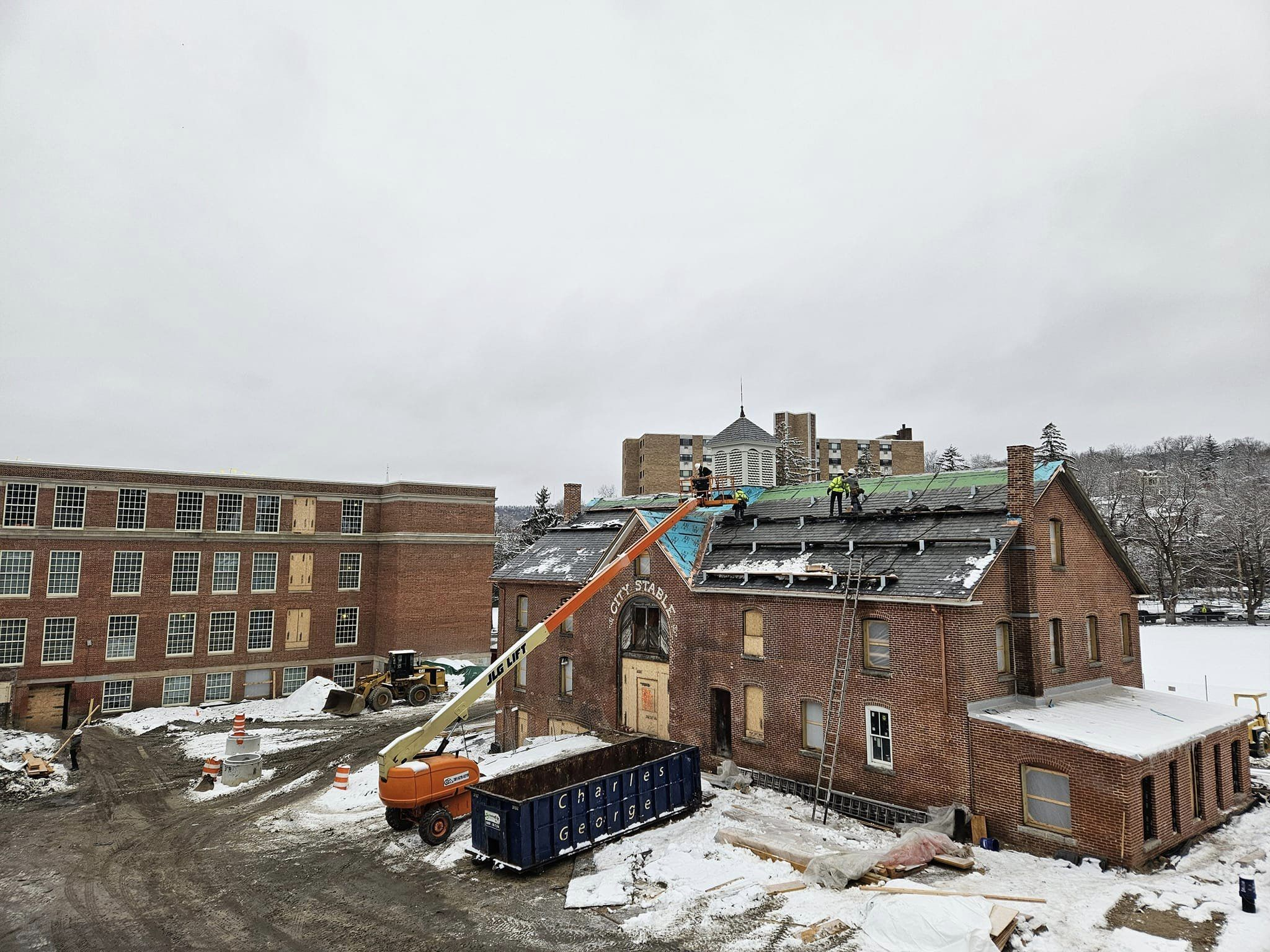
The meeting also included a presentation by Fitchburg Historical Commission Chair Keith Chenot, who spoke in recognition of National Preservation Month. “May is Preservation Month throughout the U.S., and I thought it would be good just to make a short presentation to City Council and to the residents of the city to kind of remind ourselves about what a great city we live in, the great heritage that we do have,” Chenot said. The presentation emphasized the role of preservation in maintaining Fitchburg’s character: “Preservation is about relationships—making the old new and relevant again, building pride, and connecting people to our heritage.”
Chenot’s slideshow highlighted Fitchburg’s hilly terrain, historic districts, and notable buildings across all city wards. “Fitchburg is really a very special place,” Chenot told the councilor. He also referenced specific sites such as the Rodney Wallace House on Prospect Street, built in 1864 and once home to paper manufacturer and U.S. Congressman Rodney Wallace; the Isaac Gleason House on Pearl Hill Road, an early 19th-century residence reflecting Fitchburg’s early architectural style; and the Rollstone Quarry, which began operations before 1830 and supplied granite for major structures, including bridges spanning the Nashua River. He also discussed the significance of the Nashua River in shaping Fitchburg’s industrial past, noting its role in powering mills and factories that contributed to the city’s growth.
The next Fitchburg City Council meeting is scheduled for Tuesday, June 3, 2025, at 7:00 p.m. in the Legislative Building located at 700 Main Street.